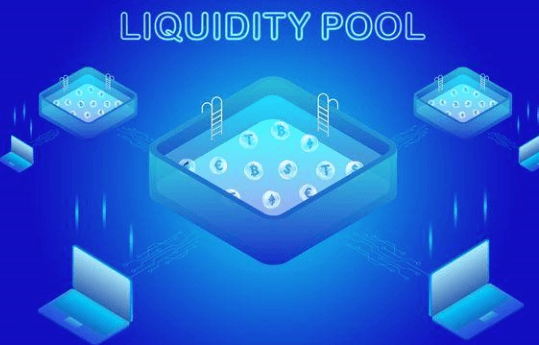
Liquidity pools are reserves of tokens locked in smart contracts that enable automated market making. They replace traditional order books with mathematical formulas that set asset prices and execution. Providers earn fees and incentives while contributing capital, and governance steers protocol evolution. The mechanism aggregates liquidity, supports continuous trading, and drives deeper markets. Yet pricing dynamics introduce risks like impermanent loss and fee structures to scrutinize, leaving a practical question about how benefits and costs balance in different ecosystems.
What Are Liquidity Pools, Exactly
Liquidity pools are collections of tokens deposited by users that enable automated trading on decentralized exchanges.
The concept design centers on liquidity provision mechanics, pricing, and risk allocation, offering transparent inputs for participants.
Governance structure details, including decision rights and upgrade processes, shape protocol evolution.
The analysis emphasizes measurable metrics, security considerations, and freedom-oriented incentives that balance efficiency with participant autonomy.
How They Work: Automated Market Makers in Practice
Automated Market Makers (AMMs) operationalize liquidity pools by using predefined formulas to set asset prices, enabling instant trades without order books.
In practice, these models convert reserves into pricing signals, shaping liquidity dynamics as trades shift relative weights.
Pool incentives align participant behavior with volume generation, sustaining liquidity supply and overall market efficiency through transparent, rules-based interactions.
Risks and Considerations: Impermanent Loss and Fees
Navigating risks in liquidity pools hinges on two principal factors: impermanent loss and trading fees. Impermanent risk arises when relative asset prices shift, potentially reducing deposited value upon withdrawal. Pool fees, collected by providers, offset some losses but vary with volume and pair design. Systemic exposure can still persist, demanding careful asset selection, tolerance assessment, and formula-driven expectations for profitability.
How to Use and Benefit: From Providers to Traders
To translate the risks identified for providers into tangible opportunities for traders, this section examines how liquidity pools operate in practice and how capital flows generate value. Providers earn fees and rewards through liquidity mining, while traders benefit from deeper markets and improved token pricing discovery. Data shows capital mobility, automated market making efficiency, and risk-adjusted yield drive strategic participation and flexible exposure.
See also: The Future of Clean Tech Innovation
Conclusion
Liquidity pools enable automated, permissionless trading by pooling tokens in smart contracts and using formulas (AMMs) to set prices. Providers earn fees and incentives while traders access instant liquidity, though risks include impermanent loss and front-running. For example, a hypothetical liquidity provider deposits equal values of ETH and DAI into a pool; as ETH price shifts, share value fluctuates, potentially yielding net gains or losses relative to simply holding assets. Data shows fee accrual often compensates for volatility over time.